Miyazaki Mango Plant Grafted | Red Japanese Variety

499.00

The Miyazaki Mango Plant — known as Taiyo no Tamago (Egg of the Sun) in Japan — is the world’s most sought-after mango variety, auctioning for over ₹2 lakh per kilogram. Its deep ruby-red skin, fiberless honey-sweet flesh, and 15% Brix minimum sugar content set it apart from every common mango grown in India. Grafted plants fruit within 1.5 to 2 years and grow well across most Indian states, including in large containers on terraces and rooftop gardens.

  • Sunlight: 6 to 8 hours of direct sun
  • Watering: Regular (Soil should stay moist)
  • Difficulty: Easy (Low maintenance)

Not Your Ordinary Mango Tree

The Miyazaki Mango plant is the variety most people first read about in a news article — and then immediately want to grow. This is a mango that auctions for over ₹2 lakh per kilogram in Japan, where each fruit is individually inspected, graded, and wrapped before sale. Known formally as the Irwin cultivar of Mangifera indica, it produces fruit unlike anything else available: deep ruby-red to purple skin, thick orange fiberless flesh, and a minimum sugar content of 15% Brix — measurably sweeter than nearly every Indian mango variety on the market.

What makes this grafted plant particularly worthwhile for Indian home gardeners is how well it adapts here. Japan grows it in temperature-controlled greenhouses. India’s warm tropical summers produce near-identical results in open gardens and on terraces. The plant doesn’t need pampering. It needs sun, the right soil, and a bit of patience.

Why This Variety Gets So Much Attention

The name Taiyo no Tamago translates literally to “Egg of the Sun.” The Japanese named it that because of the fruit’s distinctive oval shape and the way its deep red colouring develops entirely from direct sunlight exposure. No other commercially available mango looks quite like it — which is part of why it draws attention in gardens and why it commands such prices at market.

Here’s what actually sets it apart from a grower’s perspective:

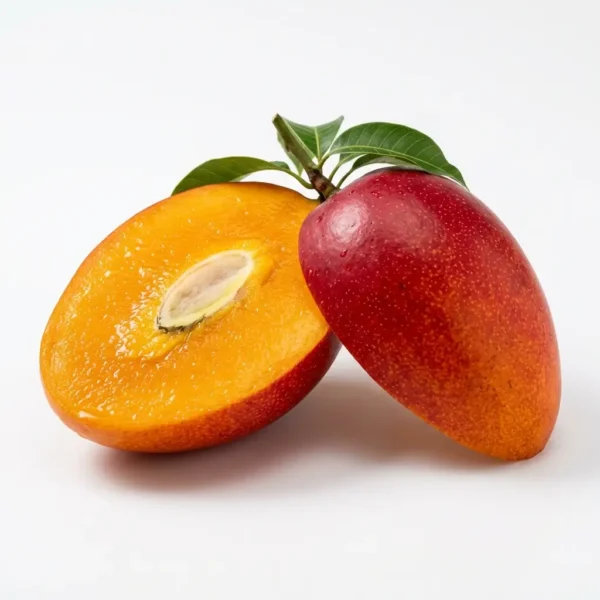
  • Skin colour: Ruby-red to deep purple at full ripeness. Most mangoes sold in India are yellow or green. This one turns heads in the garden before you even taste it.
  • Sugar content: A minimum of 15% Brix — the official quality threshold for Taiyo no Tamago certification in Japan. Well-grown Indian Miyazaki mangoes regularly meet or exceed this.
  • Flesh: Thick, smooth, entirely fiberless. No strings. The texture is often described as melting — the kind of mango you eat with a spoon, not over a sink.
  • Fruiting speed: Grafted trees begin fruiting in 1.5 to 2 years. Seed-grown trees take 5 to 8 years and produce inconsistent fruit. Only buy grafted.
  • Shelf life: Up to 10 to 15 days post-harvest — significantly longer than most common mango varieties. Useful for home growers who want time to gift or process the fruit.

What the Plant Looks Like

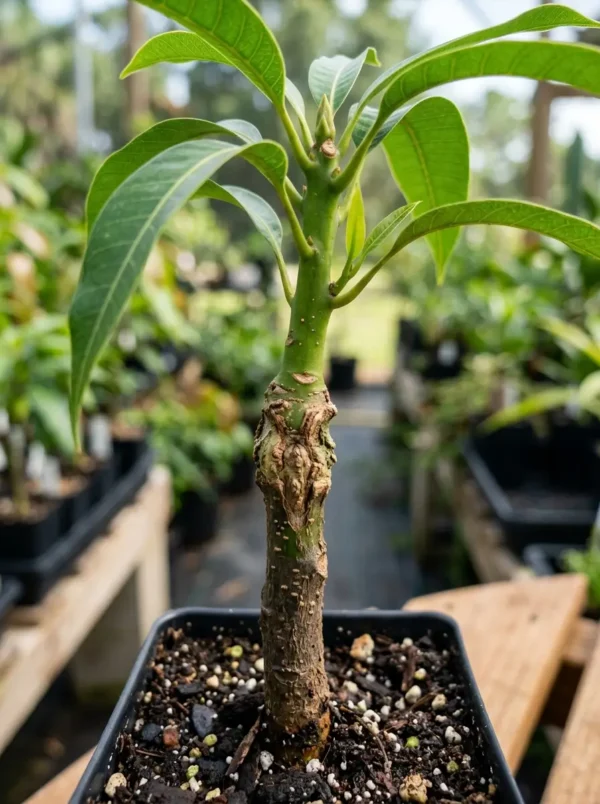
The Miyazaki Mango tree has an upright growth habit with a well-branched structure. Foliage is glossy dark green — dense enough to form a proper canopy as the tree matures. Young leaves often emerge with a slight reddish tinge before maturing to deep green, which is typical of the Irwin lineage.

The fruit is oval to egg-shaped, averaging 350 to 900 grams at maturity. Skin starts green, gradually develops red patches as it ripens, and at peak ripeness covers most of the surface in that characteristic ruby-red to purple hue. The flesh inside is deep orange — thick, juicy, and aromatic.

Mature trees reach 10 to 15 feet in open ground. In containers, growth is more restrained — typically 5 to 7 feet with regular pruning — which makes terrace cultivation practical without the tree overwhelming the space.

Real Benefits for Home Growers

  • Produces a genuinely rare, high-value fruit that most people in India have only read about
  • Ruby-red to purple skin makes the tree visually striking even outside fruiting season
  • Fiberless flesh — easy to eat fresh, ideal for smoothies, desserts, and gifting
  • Longer shelf life than most Indian varieties — 10 to 15 days post-harvest
  • Grafted plants fruit in 1.5 to 2 years — no long wait
  • Grows well across India’s tropical and subtropical climate without greenhouse conditions
  • Container-friendly — suitable for rooftop and balcony gardens with the right pot size
  • Impressive gifting plant — rare, long-lived, and instantly recognisable by name

Looking for a delicious late-season variety? Explore the Sweet fiberless Lily Mango Plant and see why it’s a favorite among mango lovers.

Where to Place It

Full sun. That is the non-negotiable requirement. The Miyazaki Mango needs 8 to 10 hours of direct sunlight daily to develop its characteristic red colouring and high sugar content. Less sun means paler fruit and lower sweetness — the two things that define this variety.

Best positions:

  • South or west-facing terraces with open sky and no overhead shade
  • Rooftop gardens where sunlight is unobstructed from morning to late afternoon
  • Open garden beds away from tall walls or neighbouring trees that cast afternoon shadow
  • Large balconies that receive direct sun for most of the day

One honest note: if your terrace or garden gets partial shade for more than a few hours daily, this is not the right variety to start with. The red colouring and sweetness that define the Miyazaki Mango are direct products of sun exposure. A shaded tree will still grow — it just won’t produce the fruit you’re expecting.

Plant Care Guide

Watering

Deep, infrequent watering works far better than light daily watering. The goal is consistently moist soil — not soggy, never bone dry. For container plants, check the top 5 cm of soil before watering. If it’s still moist, wait. If it’s dry, water thoroughly until it drains from the bottom.

The thing most buyers don’t expect is how quickly a container plant dries out in Indian summer heat. During peak summer, you may need to water every 2 days. In winter, once a week is often enough. Overwatering is the most common reason young mango plants fail — yellowing leaves and a musty smell from the soil are the warning signs.

During February to April when flowering happens, consistent soil moisture supports better fruit set. As fruits near ripeness, ease off slightly — this concentrates the sugars in the flesh.

Light

8 to 10 hours of direct sunlight daily is the target. This is more demanding than most fruit trees — and also what produces the signature red colouring. You’ll notice that fruits on the sun-facing side of the tree develop deeper red colour than those shaded by leaves. This is the same mechanism Japan’s growers manage carefully in their greenhouses, and it works just as well in an Indian garden.

Soil

Well-draining soil is essential. Heavy clay soils that retain water cause root rot — the single biggest cause of failure in container mango cultivation. For container planting, a mix of loamy garden soil, coarse river sand, and well-composted organic matter in roughly 2:1:1 proportions works well. Soil pH between 5.5 and 7.5 gives the best results.

For in-ground planting, dig the pit at least 2 feet deep and wide, and amend with sand and compost before planting. Good drainage from day one prevents most root problems. Browse our grafted fruit plants varieties for more high-quality fruit varieties suitable for home gardens.

Growth Expectations

A grafted Miyazaki Mango plant typically begins flowering in its second year and produces a first proper fruit set by year 1.5 to 2. Harvest season runs from April through August, with peak ripening in May and June across most Indian growing regions.

In containers, annual growth is moderate — restricted root space naturally keeps the tree manageable. In open ground the tree is more vigorous. Light pruning after each harvest keeps the shape compact and encourages the following year’s fruit production.

First-year fruits are often smaller than what a mature tree produces. This is completely normal. As the root system establishes, both fruit size and yield increase year on year. Don’t let a young plant carry too heavy a fruit load in its first season — redirecting that energy into root development pays back well from year two onwards.

Care at a Glance

The Miyazaki Mango is not a difficult plant to care for — it has clear, consistent needs. The summary below covers the essentials. Full care guidance with explanations is in the Plant Care Guide section above.

Care Factor Requirement
Sunlight Full sun — 8 to 10 hours direct daily (essential for red colour and sweetness)
Watering Every 2 to 3 days in summer; once a week in cooler months — always check soil first
Soil Well-draining loamy or sandy-loam with compost; pH 5.5 to 7.5
Container Size Minimum 20 to 24 inch pot with drainage holes
Pruning Light pruning after each harvest — maintains shape and encourages next season’s growth

Who This Plant Is For

  • Home gardeners with a sunny terrace, rooftop, or open garden who want something genuinely rare
  • Fruit plant collectors adding a high-value Japanese variety to their collection
  • Anyone who has read about Miyazaki mangoes and wants to grow their own rather than pay market prices for the fruit
  • Gifting buyers — rare, long-lasting, and instantly recognisable by name
  • Orchard growers looking to add a premium commercial variety with strong market value

It’s not suitable for indoor growing, heavily shaded spaces, or regions with extended cold winters below 10°C without frost protection. The plant needs warm tropical conditions to thrive and fruit properly.

Specifications

Specification Details
Botanical Name Mangifera indica (Irwin cultivar)
Common Name Miyazaki Mango / Taiyo no Tamago / Egg of the Sun
Plant Type Grafted Exotic Fruit Tree / Evergreen / Outdoor
Average Fruit Weight 350 to 900 grams per fruit
Skin Colour Deep ruby-red to purple at full ripeness
Flesh Colour / Texture Deep orange, thick, smooth, entirely fiberless
Flavour Profile Intensely sweet, aromatic, honey-like — minimum 15% Brix sugar content
Harvest Season April to August — peak ripening May to June
Time to First Fruit (grafted) 1.5 to 2 years under good growing conditions
Disease Resistance Moderate — standard mango care applies; performs well in humid Indian climates

Shipping and Plant Health

How We Pack and Ship

The plant is packed carefully to protect the root zone and foliage during transit. We use sturdy packaging designed for live plant shipping — the pot is secured, the soil is kept moist, and the plant is stabilised to prevent movement damage. We ship across India through courier services experienced with live plant transport.

When Your Plant Arrives

  1. Open the package promptly — don’t leave a live plant sealed in a box longer than necessary.
  2. Check the soil. If it feels dry, water lightly straight away.
  3. Place the plant in a shaded or semi-shaded spot for the first 5 to 7 days. This gives it time to recover from transit without the added stress of full sun.
  4. Gradually move it to its permanent sunny position over the following week — a couple of hours more sun each day rather than one sudden shift.
  5. Minor leaf drop or slight wilting in the first week is normal transit adjustment. Most plants recover fully within 7 to 14 days.

Plant Condition

All plants are inspected before dispatch and shipped in healthy condition. Some adjustment after transit is normal and expected. If your plant arrives with significant damage — not minor transit stress, but genuinely damaged — contact us within 24 hours of delivery with clear photographs. We handle these cases honestly and directly.

Not sure if this plant suits your space? Ask before you buy, we provide best possible online price in India — it’s a better outcome for everyone.

Frequently Asked Questions

How long before my grafted Miyazaki Mango plant produces fruit?

Most grafted Miyazaki Mango plants begin flowering in their second year and produce a first proper crop between 1.5 and 2 years after planting. This depends on sunlight, soil quality, and how well the plant establishes in its first season. Avoid letting a very young plant carry too many fruits early — letting it fruit properly from year two gives better long-term results.

Can I grow a Miyazaki Mango plant in a pot on my terrace?

Yes, and it works well with the right setup. Use a minimum 20 to 24 inch pot with proper drainage holes. The single most important factor is sunlight — the pot must sit in a position that gets 8 to 10 hours of direct sun daily. Without that, the fruits won’t develop their characteristic red colouring or reach their potential sweetness, regardless of how well you care for everything else.

Is the Miyazaki Mango actually different from Indian varieties, or is it just hype?

The price generates a lot of hype, but the variety is genuinely distinct. The deep red-purple skin colour is immediately visible — no common Indian mango looks like this. The sugar content is measurably higher, typically 15% Brix or above. The flesh is completely fiberless and thicker than most local varieties. The shelf life post-harvest is also notably longer. These are real, measurable differences — not marketing.

I only have partial shade in my garden. Will the plant still work?

Honestly — not ideally. The Miyazaki Mango’s red colouring and sweetness come directly from sun exposure. In partial shade, the tree will grow and may produce fruit, but the fruits will likely stay paler in colour and lower in sugar. If full sun isn’t available, this variety will underperform and may disappoint. A shadier spot suits a different fruit tree better.

What is the difference between a grafted and a seed-grown Miyazaki Mango plant?

A grafted plant carries the exact genetics of a known, proven fruiting tree and fruits within 1.5 to 2 years. A seed-grown plant is genetically unpredictable — it may not produce Miyazaki-type fruit at all, and it takes 5 to 8 years before you find out. Only buy grafted. Seeds and seedlings sold as “Miyazaki” are frequently mislabelled, and there is no way to verify the variety until the tree actually fruits.

What are the most common mistakes people make with this plant?

Three come up repeatedly. First: overwatering in containers — roots need air as much as moisture, and consistently wet soil causes root rot quickly. Second: placing the plant in insufficient sunlight and expecting full red colour and sweetness. Third: buying seed-grown or unverified saplings to save money, then waiting years only to find the fruit quality isn’t what was expected. The grafted plant costs more upfront — it saves significant time and frustration.

How do I know when the Miyazaki Mango is ripe and ready to pick?

The skin will have turned predominantly ruby-red to deep purple-red across most of the fruit’s surface. The fruit yields slightly when pressed gently near the stem end — similar to testing a ripe avocado. A strong, sweet aroma from the stem end is one of the clearest signs. Don’t pick by colour alone — some fruits colour up before the flesh is fully ripe inside. Wait for both the softening and the aroma together.

Will my plant survive Indian winters?

In most of India — yes, comfortably. The Miyazaki Mango handles temperatures down to around 10°C without damage. In northern states with cold winters, move container plants to a sheltered position during the coldest weeks. In-ground trees can be covered during brief cold spells. Extended frost will damage the plant and should be taken seriously in colder growing regions.

Is this a good plant to gift?

It’s one of the better gifting plants available. It’s rare, recognisable by name, productive, and lasts for decades. Most people who receive it already know the Miyazaki name from news articles. The main consideration: the recipient needs a sunny outdoor space. Gifting to someone in a flat without terrace access or adequate sun exposure doesn’t make sense — a different plant serves them better.

Why are some Miyazaki Mango plants sold cheaply online — are they authentic?

This is a real concern worth knowing before you buy anywhere. The variety’s fame has created a market for mislabelled plants — “Miyazaki seeds” or very cheap saplings that are actually unrelated varieties. A genuine grafted Miyazaki plant costs more than a regular mango sapling because it takes more time and skill to produce correctly. If the price looks too low for a grafted specimen, ask the seller specifically about the propagation method. Seeds cannot produce guaranteed Miyazaki-type fruit.

Sunlight

Full Sun (6-8 hours)

Watering

Regular but no water logging

Soil Type

Well-drained, rich organic soil

Fruiting Season in India

Mostly May to July (depends on climate)

Reviews

There are no reviews yet.

Be the first to review “Miyazaki Mango Plant Grafted | Red Japanese Variety”

Your email address will not be published. Required fields are marked *

📦 Want to buy this Miyazaki Mango Plant Grafted | Red Japanese Variety?

Get a healthy, grafted plant delivered safely to your home.

Order on WhatsApp

*Fast Delivery | Secure Packing | 100% Variety Guarantee

Chat with us