Our Location
Chilkana Rd, Datauli Rangad, Saharanpur, Uttar Pradesh 247001

₹599.00
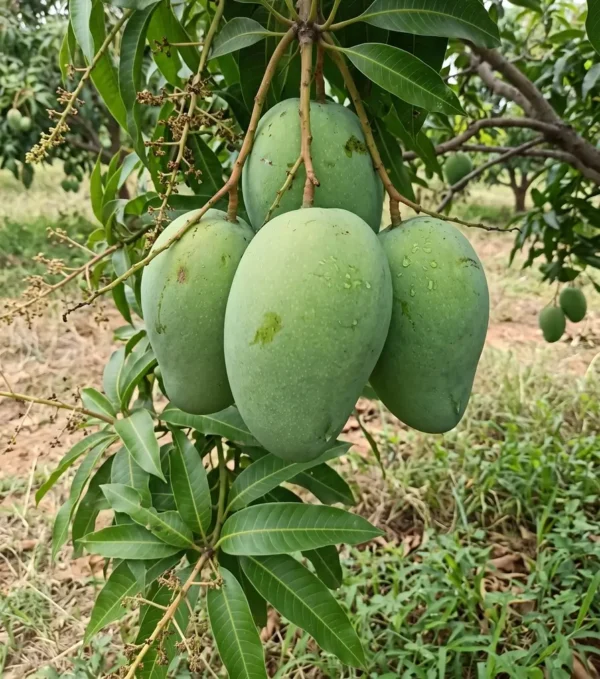
Imam Pasand mango plant (also known as Himayat) grows the legendary “King of Mangoes” — fiberless, honey-sweet fruit with real citrus and coconut notes, once reserved for Hyderabad’s royal orchards. It’s a slower, choosier grower than commercial varieties, but connoisseurs say the fruit is worth it.
Ask a serious mango grower in South India what the best mango actually is, and a surprising number won’t say Alphonso — they’ll say Imam Pasand. This Imam Pasand mango plant grows a variety with genuine royal history: it was cultivated in the private orchards of the Nawabs of Hyderabad, and its name translates from Urdu to “the Imam’s favorite.”
What you get from this tree is a medium-to-large fruit, 300 to 800 grams, with skin so thin you can eat it, wrapped around fiberless, custard-soft flesh that tastes intensely sweet with real citrus and coconut notes running through it. Connoisseurs have called it the “King of Mangoes” for a reason — that’s a reputation built over decades among people who’ve tasted a lot of mangoes, not marketing copy.
The flavor is the headline, but the numbers back it up too. Imam Pasand carries an unusually high flesh-to-seed ratio — the seed is thin and flat, so almost the entire fruit is edible pulp. Like most mango varieties, it’s self-pollinating, so a single tree will set fruit on its own.
In practice, growers harvest the fruit mature-green and let it ripen off the tree for two to four weeks rather than letting it ripen on the branch.
This is what actually brings out the variety’s signature sweetness and aroma, not a shortcut. Skip that step and you’ll end up with a mango that tastes fine instead of remarkable.
This is a moderate, well-mannered tree, not a space-eater. Imam Pasand has a trailing, spreading growth habit with fairly relaxed lateral branching, and it responds well to annual pruning — most home growers keep it at a manageable 8 to 12 feet.
The canopy fills in dense enough to give decent shade once mature, and the root system is far better behaved than more aggressive commercial varieties. On a grafted plant, flowering typically starts in the third or fourth year, right after the tree comes out of its winter dormancy.
Many grower love Maya Mango — Round-Fruit variety in big containers to grow with.
Give it full sun — 6 to 8 hours a day, no less. Good air circulation matters more than usual here, since this variety is more prone to fungal issues than hardier commercial mangoes, so avoid tight, humid corners of the garden.
It grows well in a large container too (20 to 24 inches across), which makes it one of the more forgiving specialty mangoes for smaller yards or terraces short on ground space. Here’s the honest answer on where this variety struggles: Imam Pasand’s thin skin bruises and punctures easily, so plant it somewhere it won’t get knocked around by foot traffic, pets, or overhanging branches from other trees.
Water two to three times a week in the first year, keeping the soil evenly moist but never soggy — check an inch below the surface before watering again. From the second year, taper to about once a week. During flowering and fruit set, keep moisture steady, but this variety is genuinely more sensitive to overwatering and root rot than most mangoes. When in doubt, water less, not more.
Full sun, 6 to 8 sunlight hours daily, is non-negotiable. Less light means fewer flowers and a fruit set too weak to be worth the wait.
Well-drained soil matters more here than with most mangoes — aim for a soil pH between 5.5 and 7.5. Work organic matter into the planting hole for good root aeration, keep a mulch ring around the base (clear of the trunk and graft union), and hold off on heavy nitrogen fertiliser, which pushes leafy growth over flowering.
If you’re growing in a pot, use a well-draining potting mix with coir or perlite added rather than dense garden soil. A balanced fertiliser schedule of once every three months during the growing season is plenty.
Grafted plants typically start flowering and fruiting in 3 to 4 years — quick by heritage-variety standards, since many rare cultivars take considerably longer. Mature trees reach 8 to 12 feet with routine pruning. One honest limitation worth knowing upfront: this variety naturally produces a smaller yield than commercial mangoes, and it’s genuinely more work to grow well. That’s exactly why it stays rare instead of showing up in every supermarket crate.
| Specification | Detail |
|---|---|
| Botanical Name | Mangifera indica ‘Imam Pasand’ (Himayat) |
| Common Name | Imam Pasand Mango (also Himayat, Hamam) |
| Plant Type | Evergreen fruit plant |
| Grafted or Seedling | Grafted (true-to-type) |
| Mature Height | 8–12 ft with routine pruning |
| Time to First Fruit | 3–4 years (grafted) |
| Container Suitability | Suitable in a large 20–24 inch pot |
| Sunlight Requirement | Full sun, 6–8 hours daily |
| Watering Frequency | 2–3x weekly while young; weekly once established |
| Soil Type | Well-drained loam, rich in organic matter, pH 5.5–7.5 |
| Climate Requirement | Warm tropical/subtropical Indian climates; no frost or waterlogging |
| Harvest Season | Mid-season, April–June (regional variation) |
Water two to three times a week while young, tapering to weekly once established. This variety is more prone to root rot than hardier mangoes, so err on the side of less water, not more.
Yes — it’s one of the more forgiving specialty mangoes for containers. Use a large pot, 20 to 24 inches across, with good drainage, and expect a more compact, manageable tree than in open ground.
Grafted plants typically flower and fruit within 3 to 4 years. That’s quick for a heritage variety — many rare cultivars take considerably longer to bear their first crop.
Its thin, flat seed gives an unusually high flesh-to-seed ratio, and the fiberless flesh carries real citrus and coconut notes most commercial mangoes don’t have. It’s a genuinely different eating experience.
Overwatering. Imam Pasand is more sensitive to fungal issues and root rot than typical mango varieties, so growers used to watering heavily often lose the plant before it ever fruits.
Plants ship in their nursery pot with soil intact to protect the roots in transit; a little leaf drop after arrival is normal transplant stress, not a sign of a dying plant. We currently ship within India only, and pause dispatch during extreme heat waves along the delivery route to protect the graft. Inspect your plant on arrival and water it in well within 24 hours of unboxing.
Call us to check availability, price, bulk orders, or get planting advice.
Call Now*Fast Delivery | Secure Packing | Expert Support
Reviews
There are no reviews yet.