Our Location
Chilkana Rd, Datauli Rangad, Saharanpur, Uttar Pradesh 247001

₹999.00
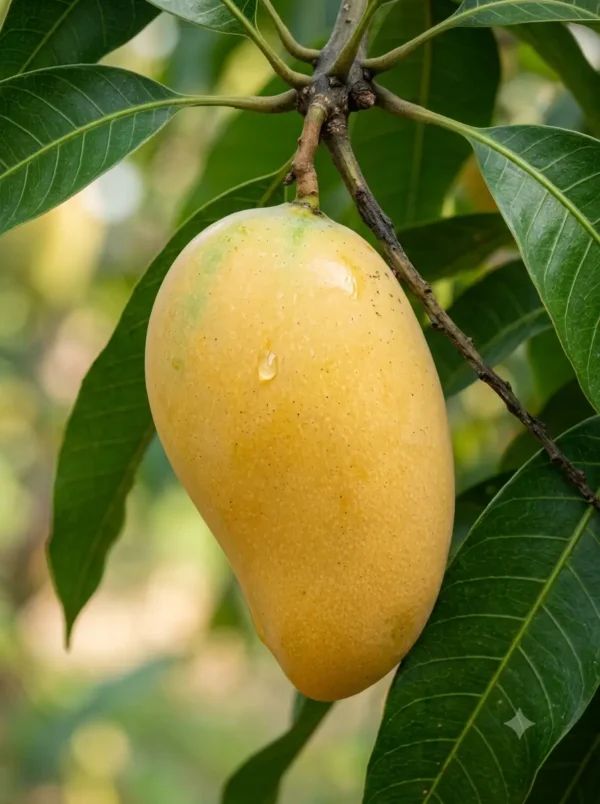
Kohitur mango plant traces back to the royal orchards of Murshidabad, where it was bred exclusively for the Nawabs of Bengal. Buttery, fiberless flesh, a saffron-like perfume, and one of the highest sugar contents of any mango — grafted for authentic fruit, available in extremely limited stock.
Few plants come with a paper trail like this one. The Kohitur mango plant was bred in the 1750s under the personal patronage of Nawab Siraj-ud-Daulah, using select genetics that included the now nearly extinct Kalapahar mango. For most of its history, it never left royal gardens in Murshidabad. Today, supply is so tight that in the 2025 season, only three surviving trees in the Nawab’s historic orchard bore fruit — a total of 150 mangoes, for the entire country. What you’re growing here is a grafted plant carrying that same rare lineage, not a lookalike sold under a borrowed name.
Mostly, people choose Kohitur because they’ve read about it and want to taste it for themselves — buying the fruit isn’t really an option; it barely reaches open markets. The flesh is completely fiberless, buttery in texture, and carries a sugar content of 23 to 26° Brix, which is genuinely high even by mango standards. You’ll notice the aroma before you even cut into it — intense, perfumed, almost floral. That’s the actual draw here, not just the history behind it.
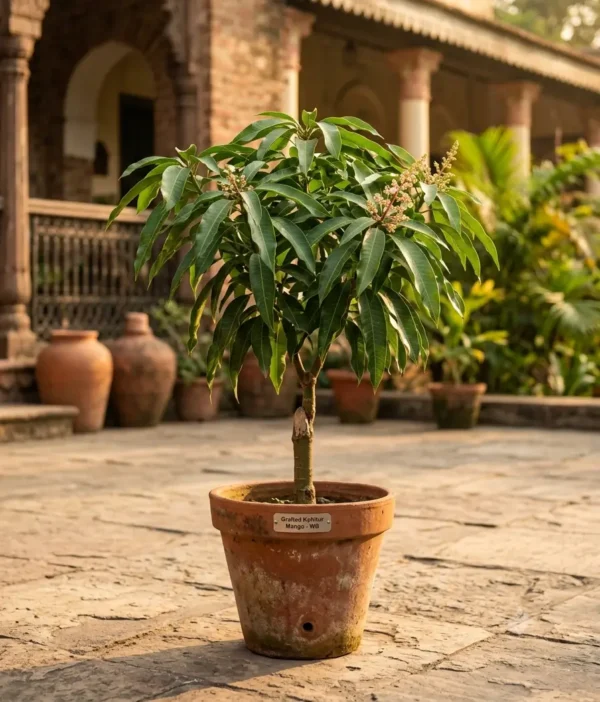
A grafted Kohitur stays compact in its early years, with a moderate canopy and lateral branching that responds well to light pruning. Leaves are glossy and elongated. Flower clusters are small, pinkish-white, and fragrant, appearing at branch tips as the plant comes out of winter dormancy. Fruit set can be inconsistent in the first couple of fruiting seasons — that’s normal for this variety, not a sign of a weak plant. The fruit itself is famously delicate. Traditionally, pickers used bamboo splinters instead of shears to separate it from the branch, and even today growers avoid metal knives when cutting it, since metal is believed to dull the fruit’s aroma.
Full sun for at least 6 hours a day — Kohitur won’t flower well in partial shade. Warm, frost-free zones suit it best, which covers most tropical and subtropical parts of India. If you’re growing in a container, place it somewhere sheltered from strong wind; the branches carrying fruit are more fragile than on standard mango varieties, and wind damage here costs you more than it would on a hardier cultivar.
Water when the top 1–2 inches of soil feel dry — roughly 200ml at a time for a potted plant. Water thoroughly in summer, ease off in winter and the rainy season. Overwatering is the single most common way buyers lose this plant in year one.
More than 6 hours of direct sunlight daily is ideal for flowering and fruit development. Less than that, and you’ll get healthy foliage but poor fruit set — a trade-off worth knowing before you pick a spot.
Well-drained, fertile soil rich in organic matter, with a pH between 5.5 and 7.5. A sandy loam mix with added compost works well in containers. Poor drainage is the fastest way to trigger root rot in this variety, so aeration matters as much as fertility.
Grafted Kohitur plants typically begin fruiting within 3 to 4 years under good care. In practice, container-grown plants often take slightly longer to establish a strong root system before they commit energy to fruiting — that’s expected, not a fault in the plant. One honest limitation: yields on Kohitur are naturally lower and less predictable than commercial mango varieties. This is a heritage plant grown for flavour and rarity, not for high-volume harvests.
| Specification | Detail |
|---|---|
| Botanical Name | Mangifera indica ‘Kohitur’ |
| Common Name | Kohitur Mango |
| Plant Type | Tropical fruit tree, heritage variety |
| Grafted or Seedling | Grafted |
| Mature Height | Compact, manageable with pruning |
| Time to First Fruit | 3–4 years (grafted) |
| Container Suitability | Yes — suited to large pots |
| Sunlight Requirement | Full sun, 6+ hours daily |
| Watering Frequency | When top 1–2 inches of soil are dry; reduce in winter |
| Soil Type | Well-drained loam, pH 5.5–7.5, rich in organic matter |
| Climate Requirement | Warm, frost-free, tropical/subtropical |
| Harvest Season | Summer (limited yield, short window) |
Water when the top 1–2 inches of soil feel dry, roughly 200ml for a potted plant. Water thoroughly in summer, reduce in winter and monsoon. Overwatering is the most common cause of losing this plant early.
Yes. Its compact growth habit suits large containers well. Use well-drained loamy soil, ensure 6+ hours of direct sun, and expect slightly slower establishment than in-ground planting.
Typically 3 to 4 years with good care. Container-grown plants may take a little longer, since they spend early years building a strong root system before committing to fruit.
It needs a warm, frost-free climate with plenty of direct sunlight. Most tropical and subtropical regions of India work well; cold winters or heavy shade will hurt flowering and fruit set.
Overwatering, by far. Growers also underestimate how delicate the fruit is at harvest — rough handling or metal tools can bruise it and affect flavour, so gentle picking matters more here than with common mango varieties.
Call us to check availability, price, bulk orders, or get planting advice.
Call Now*Fast Delivery | Secure Packing | Expert Support
Reviews
There are no reviews yet.